I meet quite some people that consider management and leadership as simple.
"You define a vision. You point the way. And others follow."
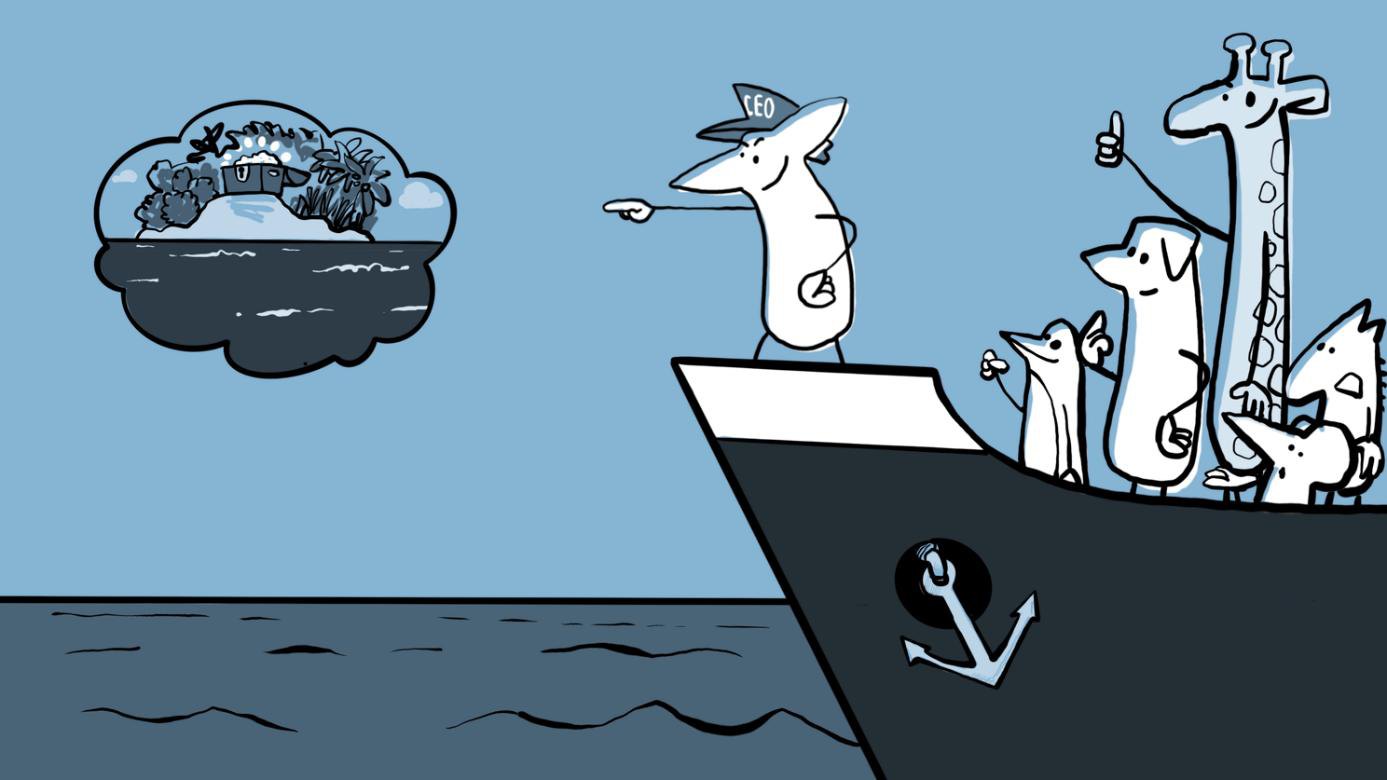
🅰️ The “visionary CEO”
The classic image of a CEO:
You see the island in the distance. You define the dream. You tell everyone where to go.
And your team? They believe. They follow. They commit.
This works—especially when the environment is stable and complexity is limited.
🅱️ Breaking the dream into execution
As organisations grow, leadership evolves.
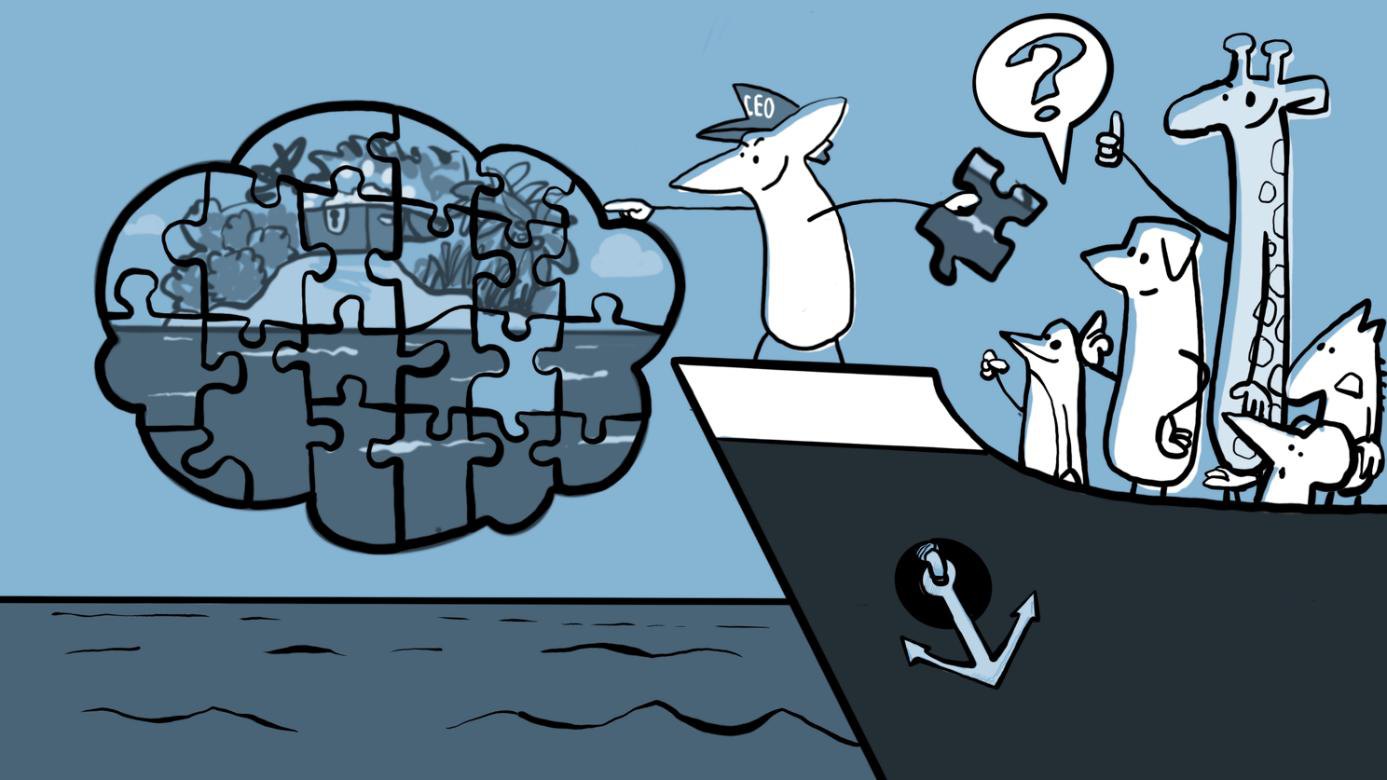
The vision gets broken into pieces. Each person receives a part of the puzzle.
The CEO:
coordinates
tracks progress
ensures alignment
But something subtle happens.
People focus on their piece… without always seeing the full picture.
Execution becomes efficient— but understanding becomes fragmented.
And the instructions from the CEO and top management are based on his/her/their limited view of the market and the way they are like to work and approach themselves.
🅲 When the market changes faster than the plan
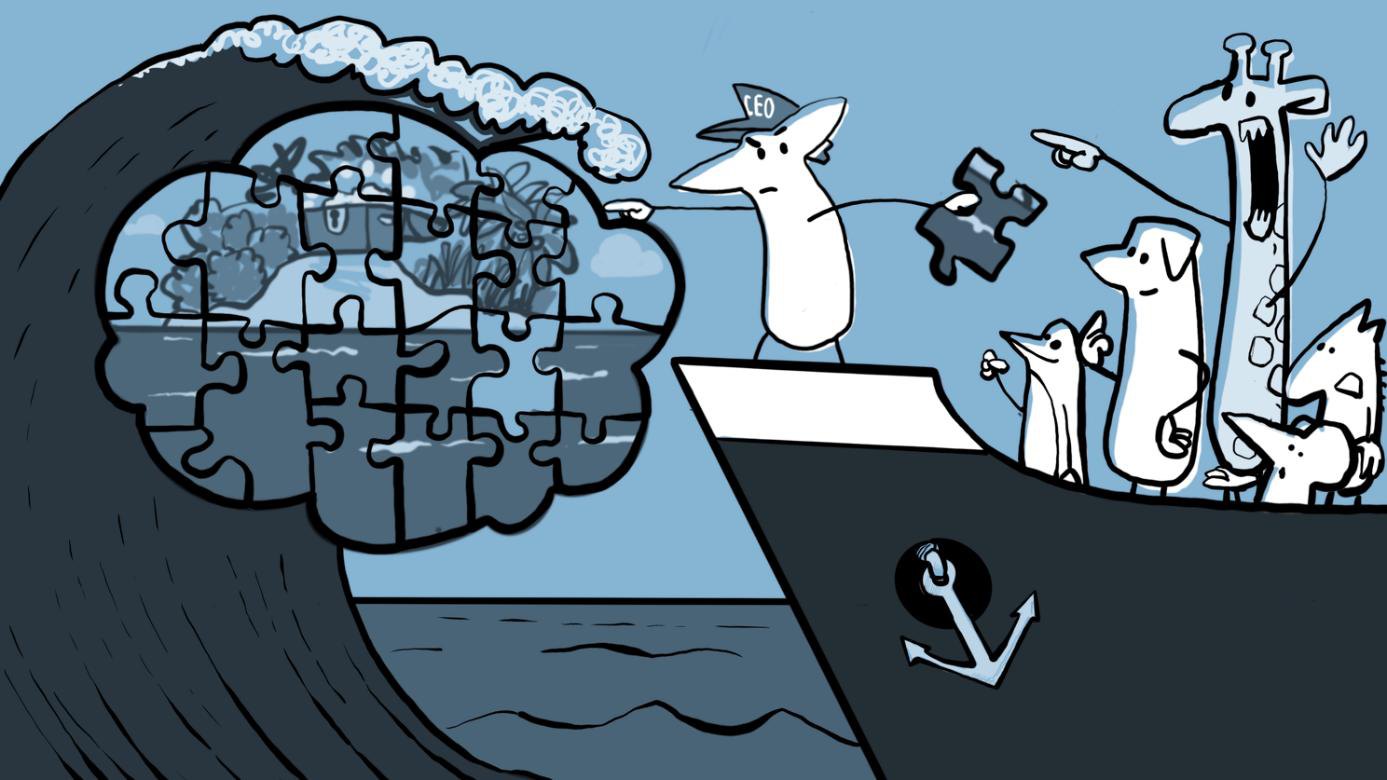
While the team works on the plan, the world keeps moving.
The CEO is still chasing the island. But the environment is shifting underneath.
Signals are scattered. Warning signs are easy to miss.
And sometimes… 👉 the “tsunami” is not part of the plan
By the time it becomes visible, it may already be too late.
🅳 A different starting point: read the waves
What if leadership starts differently?
Instead of defining a fixed destination…
We recognise that:
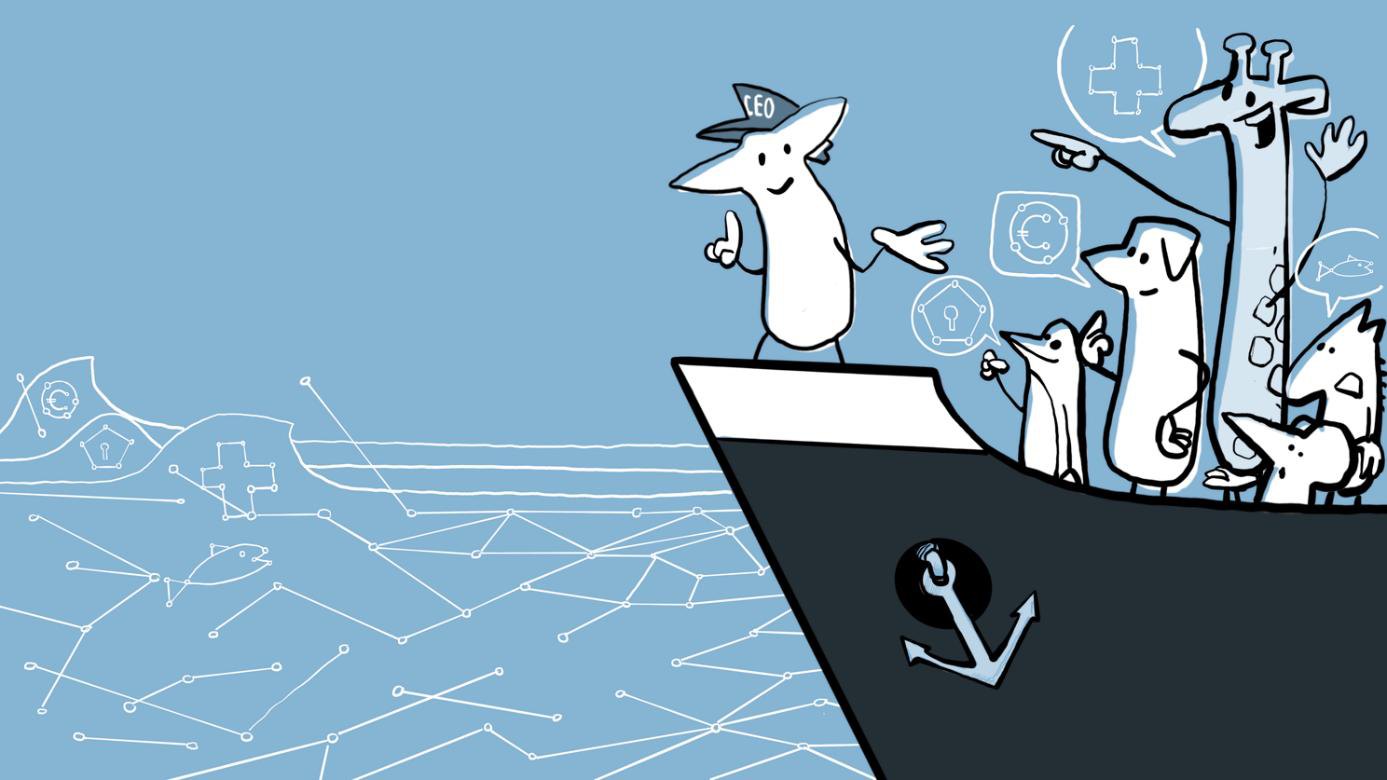
the “sea” is constantly evolving
there is no single clear pattern
signals are distributed across the organisation
The best insights don’t sit at the top.
They live:
with engineers
with customers
with product teams
at the edge of the market
Leadership then becomes: 👉 connecting those signals
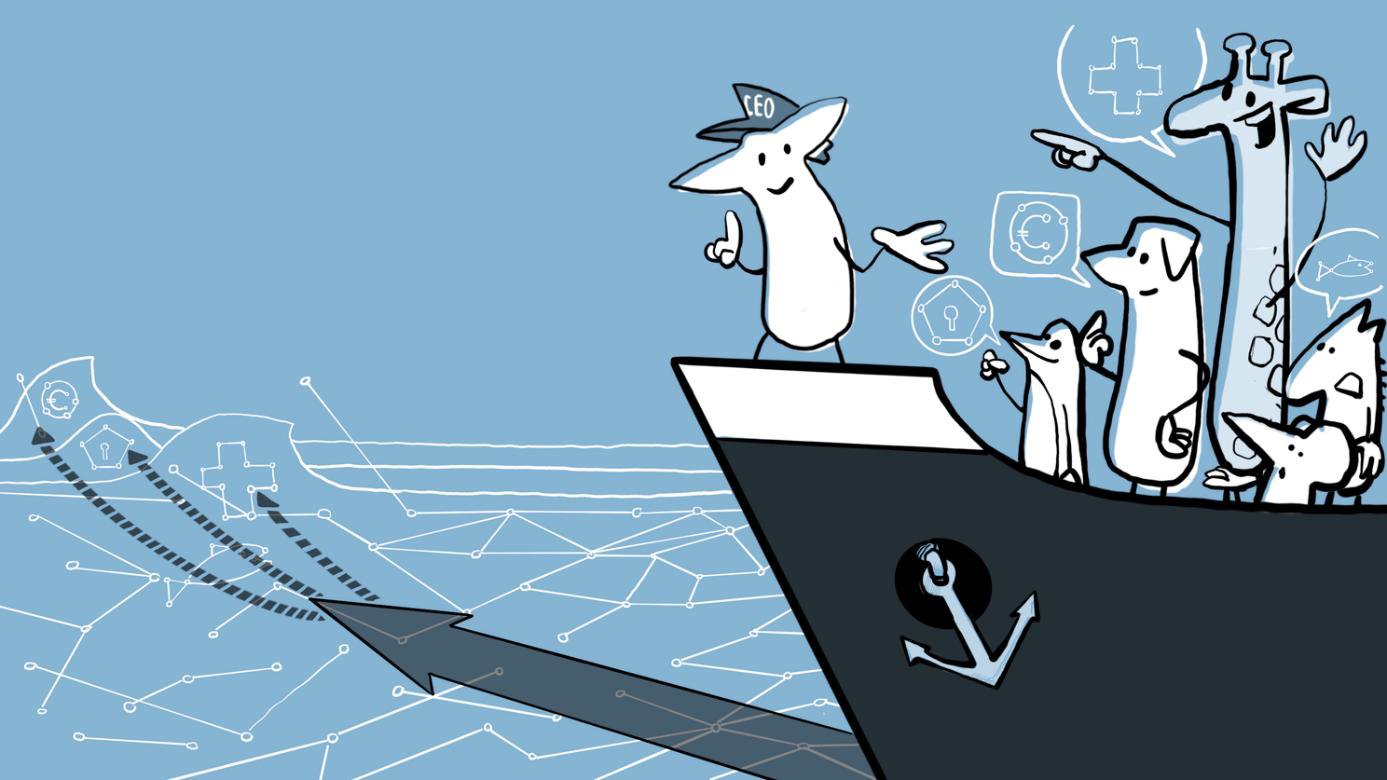
🅴 Navigating with multiple scenarios
Instead of one fixed path…
You create a shared understanding of:
possible waves
alternative scenarios
early signals to track
And you continuously adjust: not after change happens, but while it is forming.
The role of the CEO shifts: 👉 from “having the answer” 👉 to “orchestrating awareness”
🅵 Adjusting course together
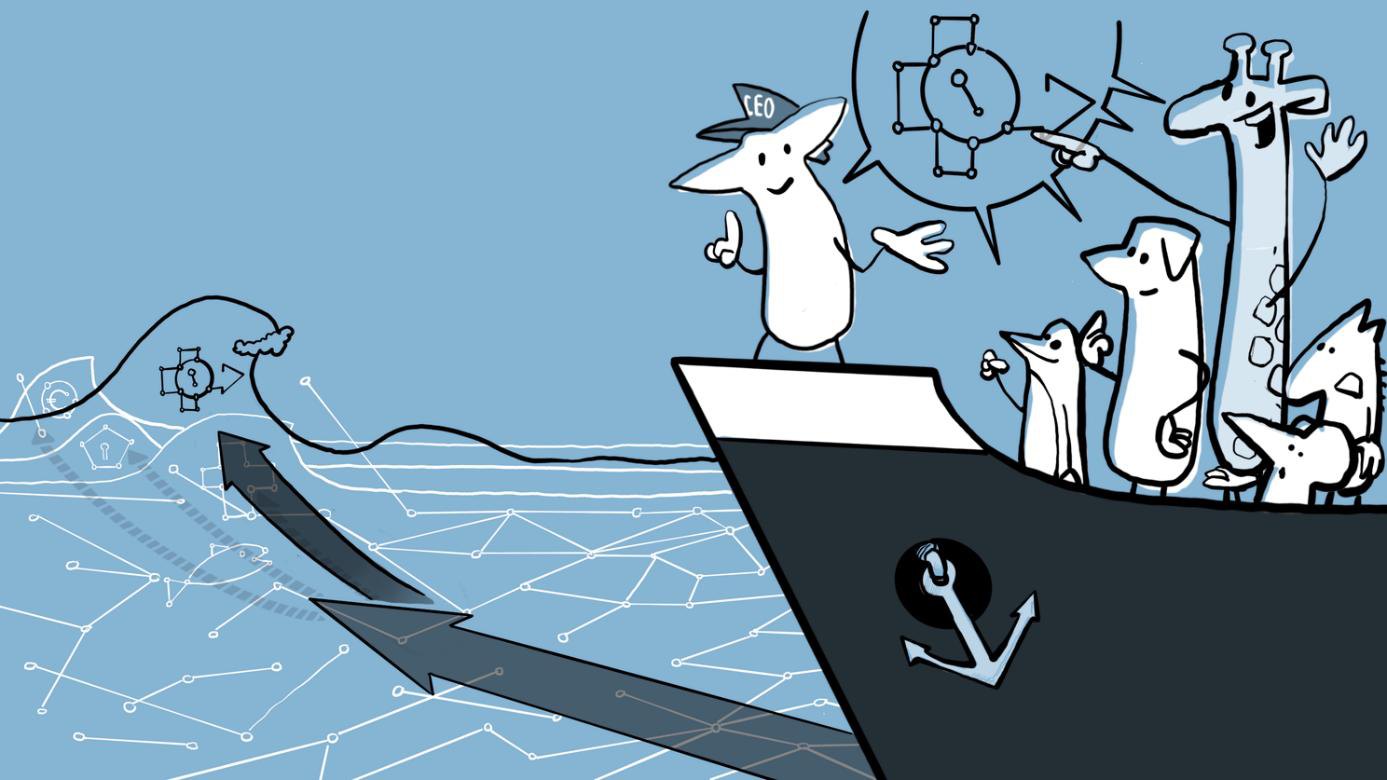
And then reality hits.
A wave appears… that no one fully predicted.
The advantage is no longer prediction.
It is: 👉 the ability to adjust quickly
This only works if the organisation is designed for it — not just encouraged.
If your company:
listens to signals
shares perspectives
stays flexible
Then change is not a disruption. It becomes a capability.
⚡ A reflection for tech entrepreneurs
In fast-moving markets which is increasingly the case with evolutions in AI and related technologies:
The CEO can no longer see everything
Strategy cannot remain static
Execution cannot be fully predefined
nobody really knows how AI, DLT and many other evolutions will exactly occur; so you need to set course to be able to adopt when the wave becomes real.
There is also a growing leadership risk:
👉 You optimise to win the current battle… 👉 while the game itself is quietly changing
🎯 The new leadership question
It is no longer:
“Where do I take the company?”
It is:
“How do we stay aware, adaptive, and ready together?”
🔥 Closing insight
The real risk for today’s leaders is not choosing the wrong direction — it is becoming so focused on the path that they stop seeing the waves.
Originally published on LinkedIn. View original article.