what it is, why it exists, and why people disagree about it
Short selling is one of those financial concepts that sounds complicated, feels uncomfortable, and suddenly becomes very visible when a company’s share price starts to move fast.
I get a lot of questions about it. What is short selling? Why does it happen? And is it even legitimate to “bet” on a company going down?
Let me try to explain it in simple terms.
1. How prices normally form
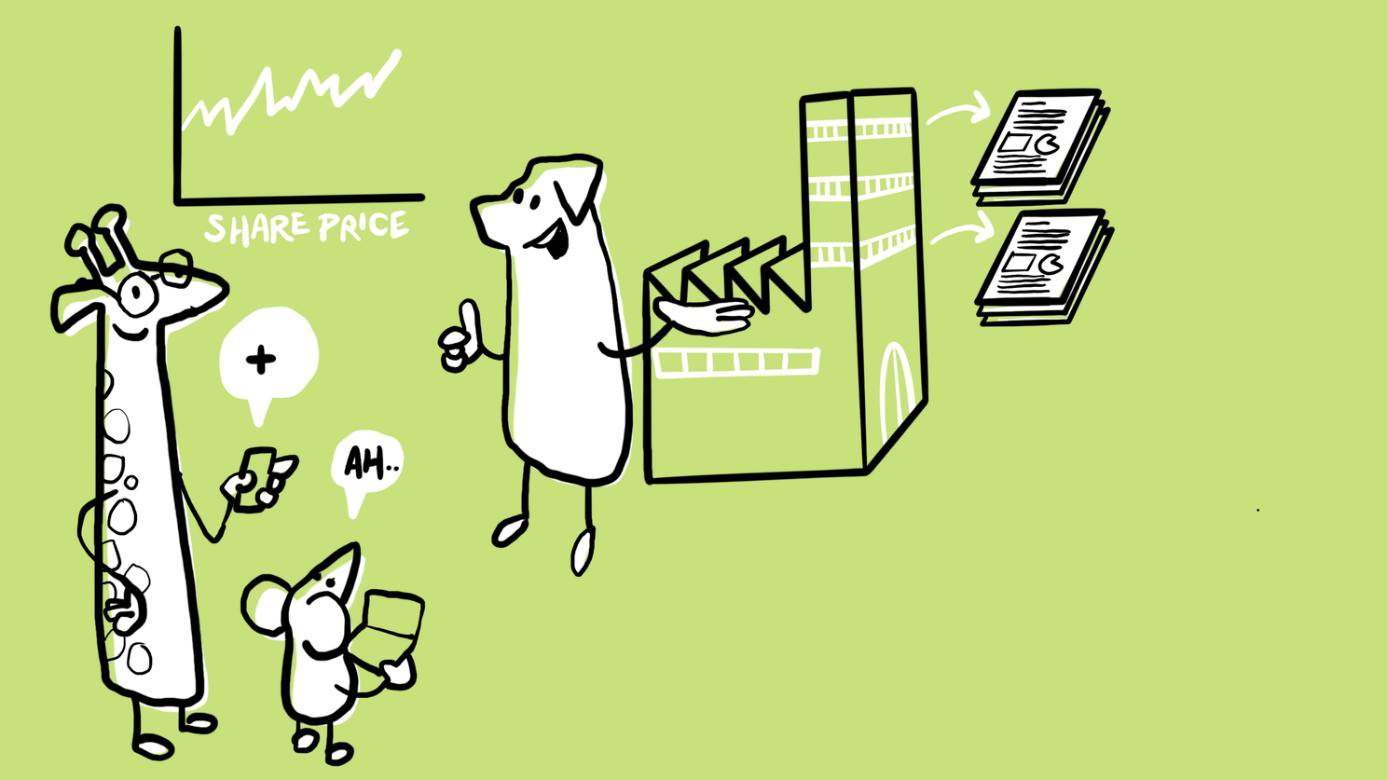
In a “normal” market situation, things look fairly intuitive.
A company explains what it does. The CEO presents strategy, products, results, and a view on the future. The company publishes regular updates.
Investors listen, compare, debate, disagree — and out of all those opinions a market price emerges.
That price is not “the truth”. It is simply the consensus at that moment between buyers and sellers.
Sometimes the consensus is optimistic. Sometimes cautious. Often somewhere in between.
2. What if someone sees serious problems?
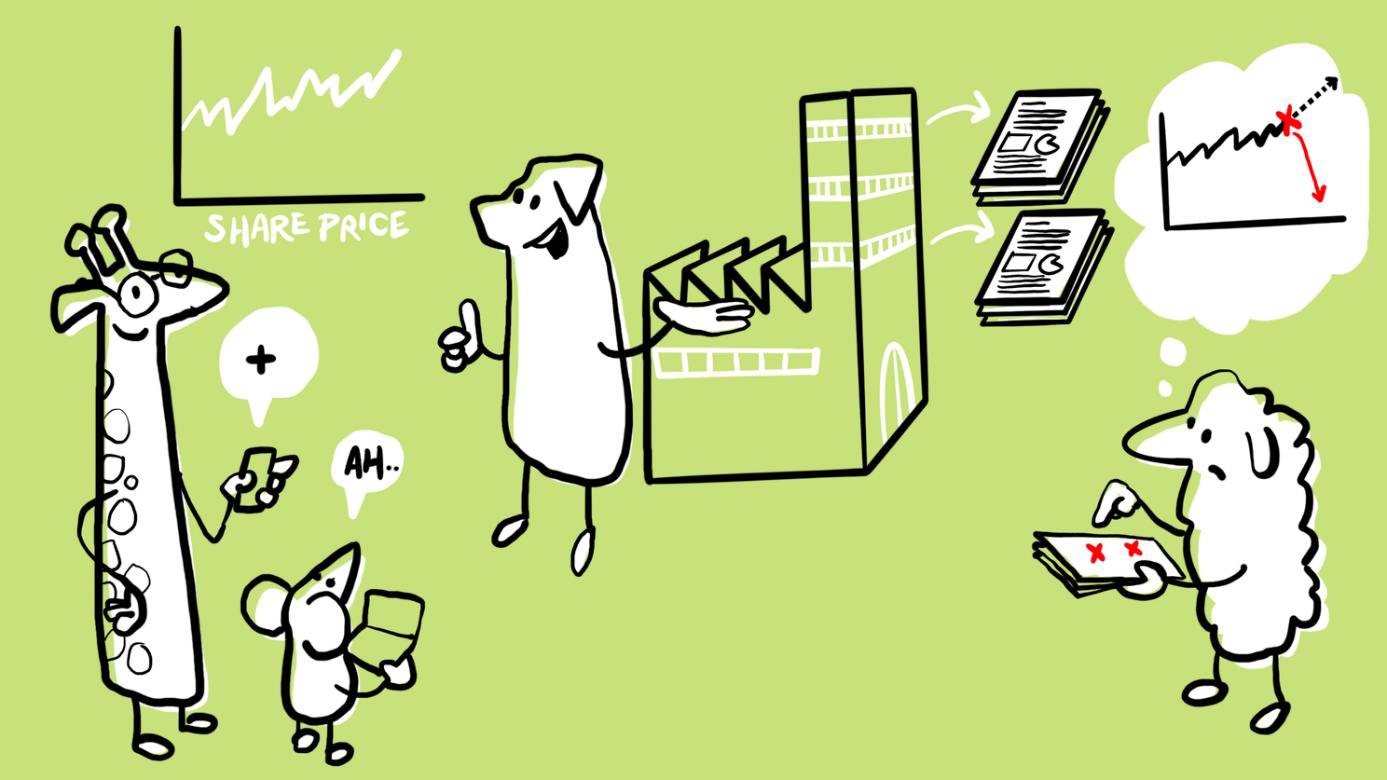
Sometimes, an investor, analyst, or researcher believes the consensus is wrong.
Not because growth is slower than expected, but because they believe there is material information the market is not properly pricing in:
structural weaknesses
flawed assumptions
risk to continuity
fragile financing
or business realities that clash with the story
Instead of expecting the price to go up, they expect the price to go down.
At that point, the question becomes: How do you act on a negative expectation?
3. Short selling in its simplest form
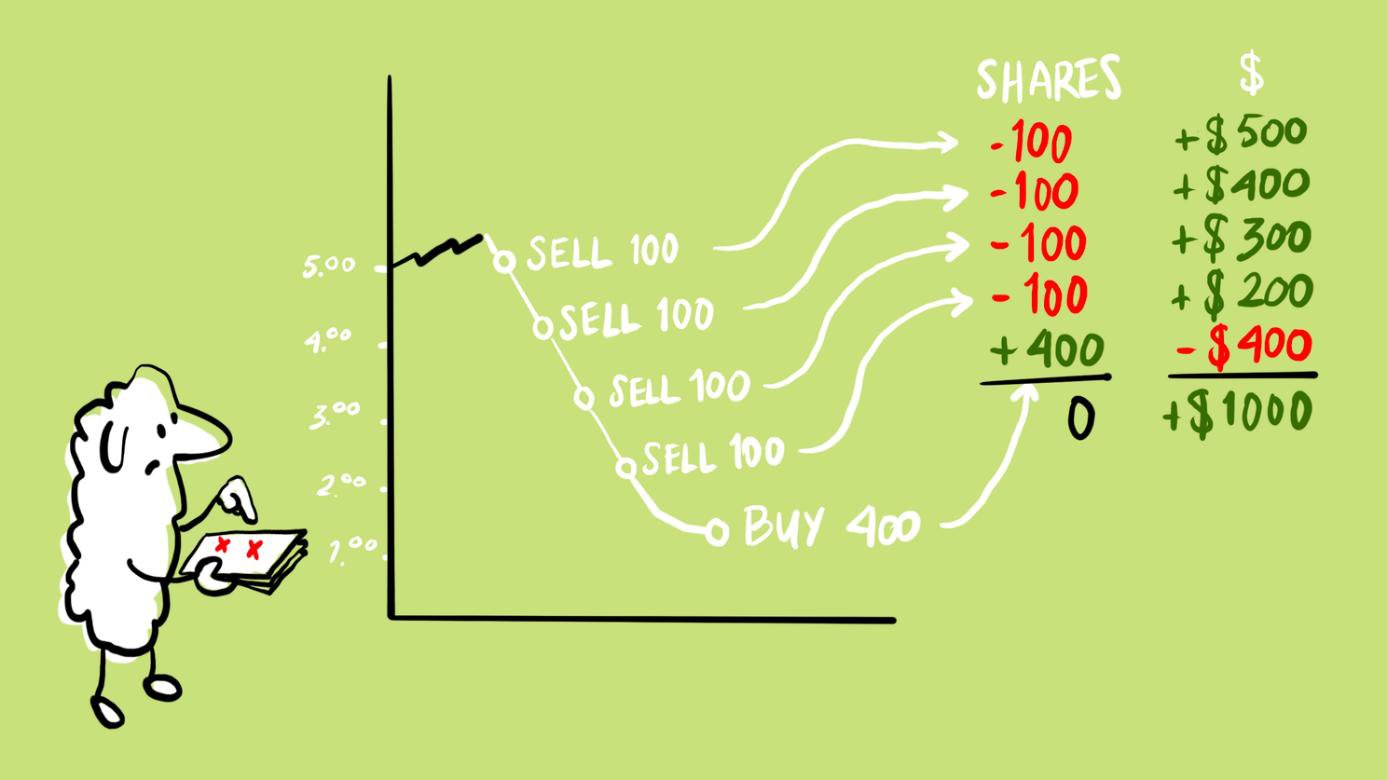
With normal investing, you buy shares first and sell them later.
With short selling, it works the other way around.
A simplified example:
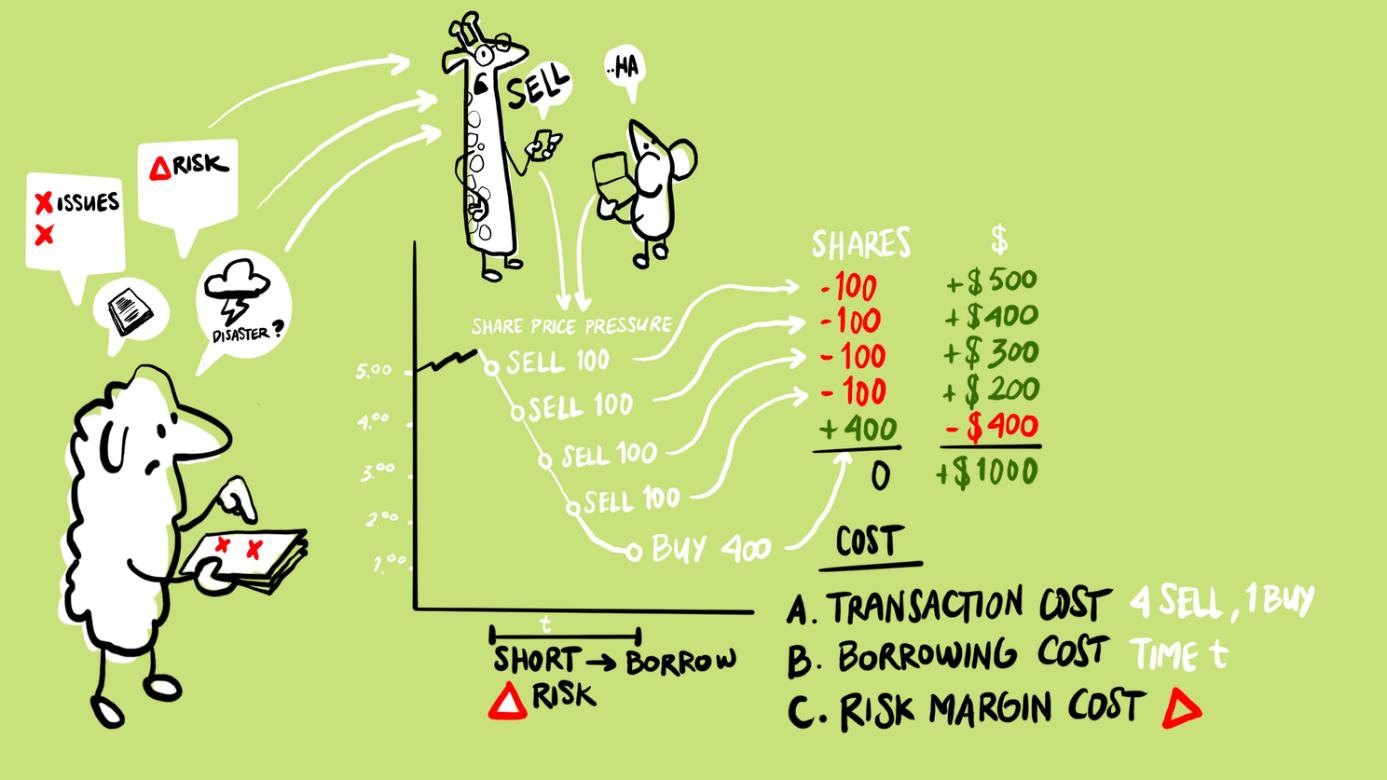
The share trades at 5
The short seller sells 100 shares they do not own
Later, at lower prices (4, 3, 2), they keep selling
At some point, they buy back the shares to close their position
In the simplified example in the cartoon:
They sold high
They bought low
The total difference is profit
This looks simple on paper — but reality is more complex.
4. It’s not “free money”: costs and risk
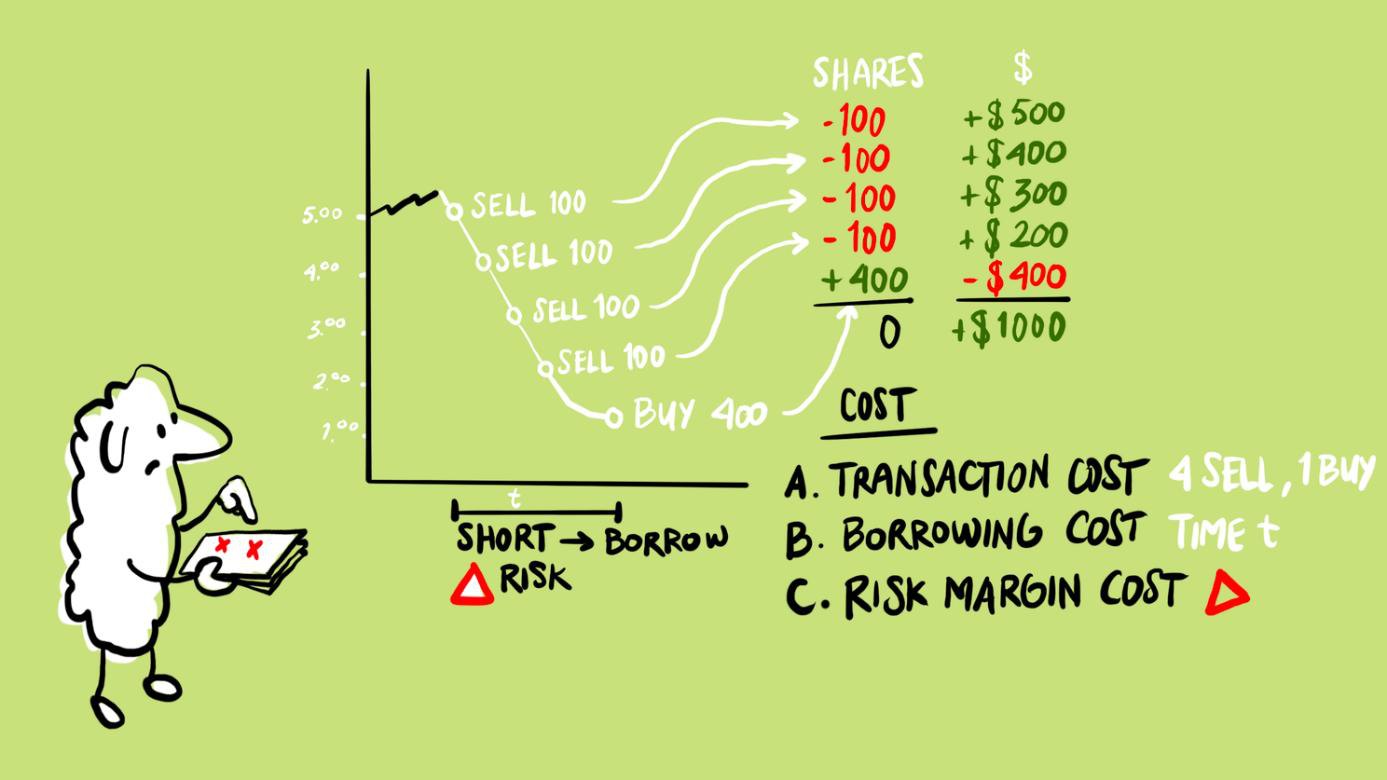
Short selling comes with real costs and real risk.
There are at least three important ones:
A. Transaction costs Every sell and every buy costs money. Short strategies often involve many transactions.
B. Borrowing costs If you sell shares you don’t own, at some point you must deliver them. That often means borrowing shares from another party, for a fee.
C. Risk and collateral This is crucial.
If the share price goes up instead of down:
buying back becomes more expensive
the position stays open longer
risk increases
And unlike buying a share (where the maximum loss is what you invested), theoretical losses in short selling are unlimited — because a share price can keep rising.
This is why short sellers must provide collateral and margin.
Short selling is not risk-free. Not at all.
5. And then there is the ethics question
This is where opinions really diverge.
Some people see short selling as:
“Betting on companies to fail”
Others argue it can play a role in:
exposing weak business models or unrealistic stories
Context matters.
In the US, for example, bankruptcy frameworks, market structure, and supplier powers are different than in Europe. In parts of Europe (including the Netherlands), suppliers can trigger bankruptcy much earlier, which already puts pressure on non‑viable companies.
So the economic function of short selling is not identical everywhere.
Behavior also matters:
Is the short seller genuinely trying to understand the business?
Or are they creating a simplified caricature?
Are they sharing analysis — or mainly amplifying fear?
History shows both exist.
There have also been many cases where short sellers were wrong, leading to so‑called short squeezes, where prices rise sharply and short positions are forced to close at a loss.
One ethical test I personally find useful (inspired by moral philosophy) is:
“What if everyone did this — would the outcome still be acceptable?”
That question rarely has an easy answer here.
A final thought
Short selling itself is neither pure evil nor pure good.
It is a mechanism. Its impact depends on incentives, behavior, rules, and market context.
For founders and tech entrepreneurs, the key lesson is not to obsess over short sellers — but to understand:
how markets form opinions
how fragile consensus can be
and how important clear, credible communication really is when pressure rises
In the end, strong fundamentals still matter most.
Originally published on LinkedIn. View original article.