Cartoons in Finance #13
Financial markets rarely speak with one voice.
Yet most of the time, we mostly listen to the loudest one: share prices. Green screens feel comforting. New highs make headlines. Confidence is contagious.
Last week was a good example.
Despite wars, geopolitical tensions and ongoing debates about a potential AI bubble, equity markets looked joyful and optimistic — even breaking records in several markets.
That’s where this episode starts.
The joyful surface
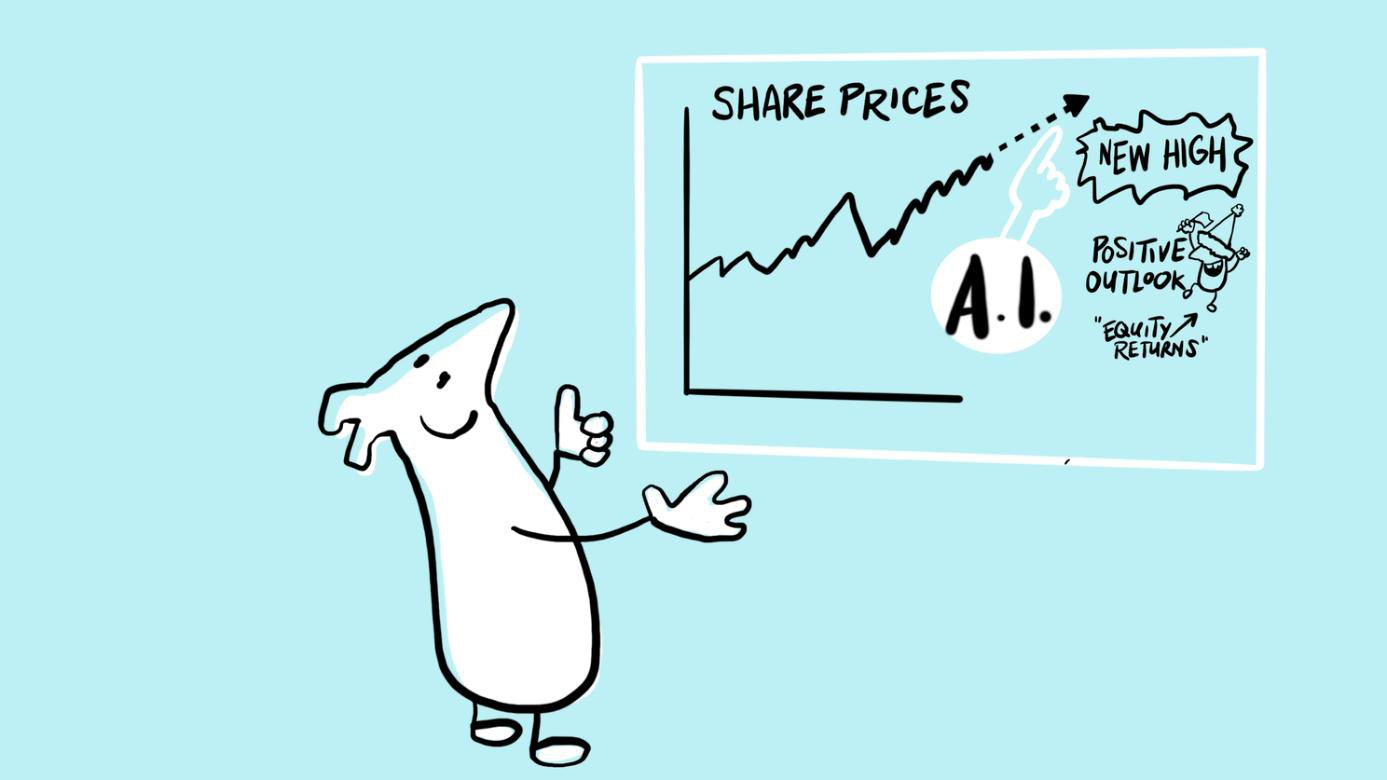
Share prices going up. Optimism everywhere. Markets that seem confident, forward‑looking, and unbothered.
Equity markets are very good at reflecting belief:
belief in technology,
belief in productivity gains,
belief in future winners.
They are forward‑looking by nature and often price what could be, not what already is.
But markets are ecosystems. And beneath the surface, something else was happening.
What sits in the shadows
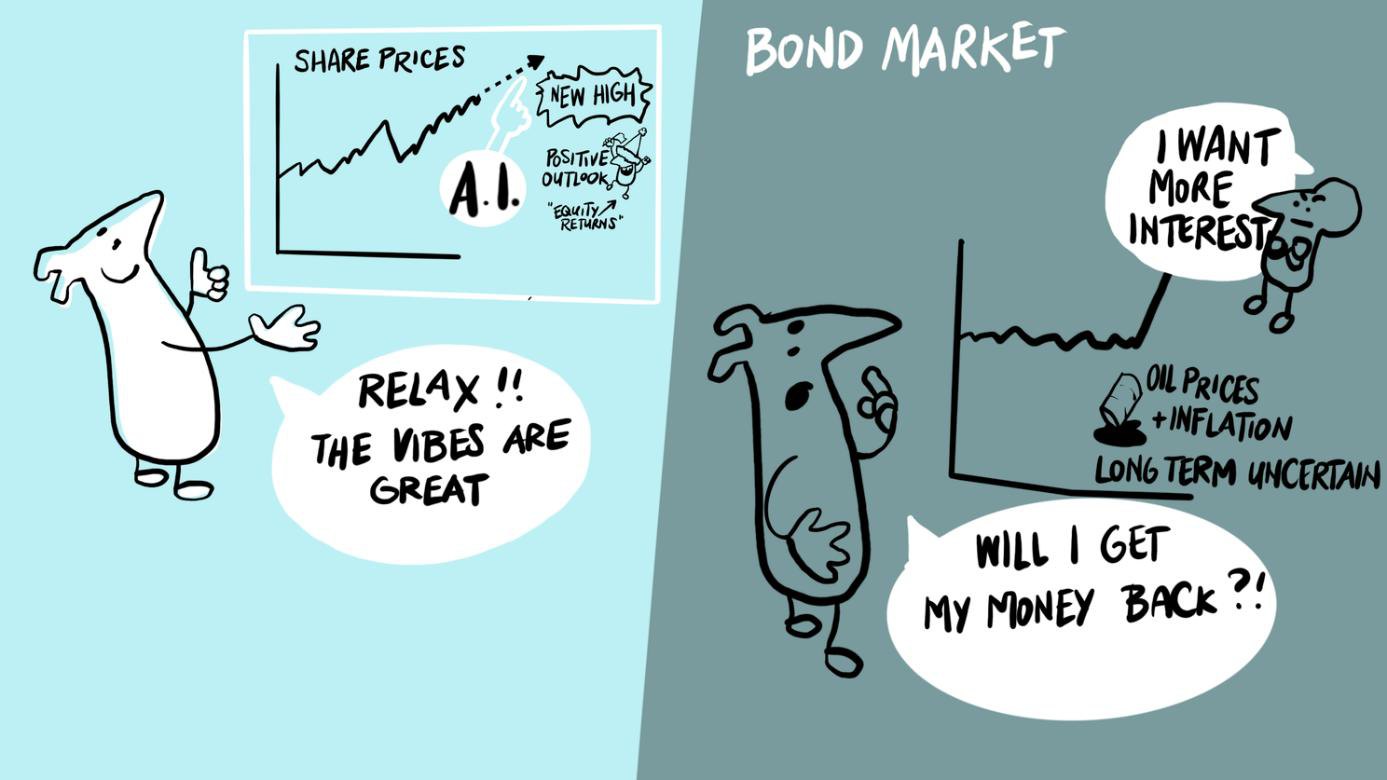
While equities were celebrating, bond yields were moving up.
This rarely makes front‑page news, but it matters enormously.
Bond investors are people lending money — often for long periods of time. They don’t primarily ask “what’s the upside?” They ask something simpler and more uncomfortable:
Will I get my money back — and what will it be worth?
Rising oil prices can work their way through the economy. Inflation risks may not be gone. Policy, geopolitics and longer‑term uncertainty start to matter more.
So while equity markets looked confident, bond markets quietly reassessed the price of risk.
That’s not pessimism. That’s caution by design.
Two markets, two lenses
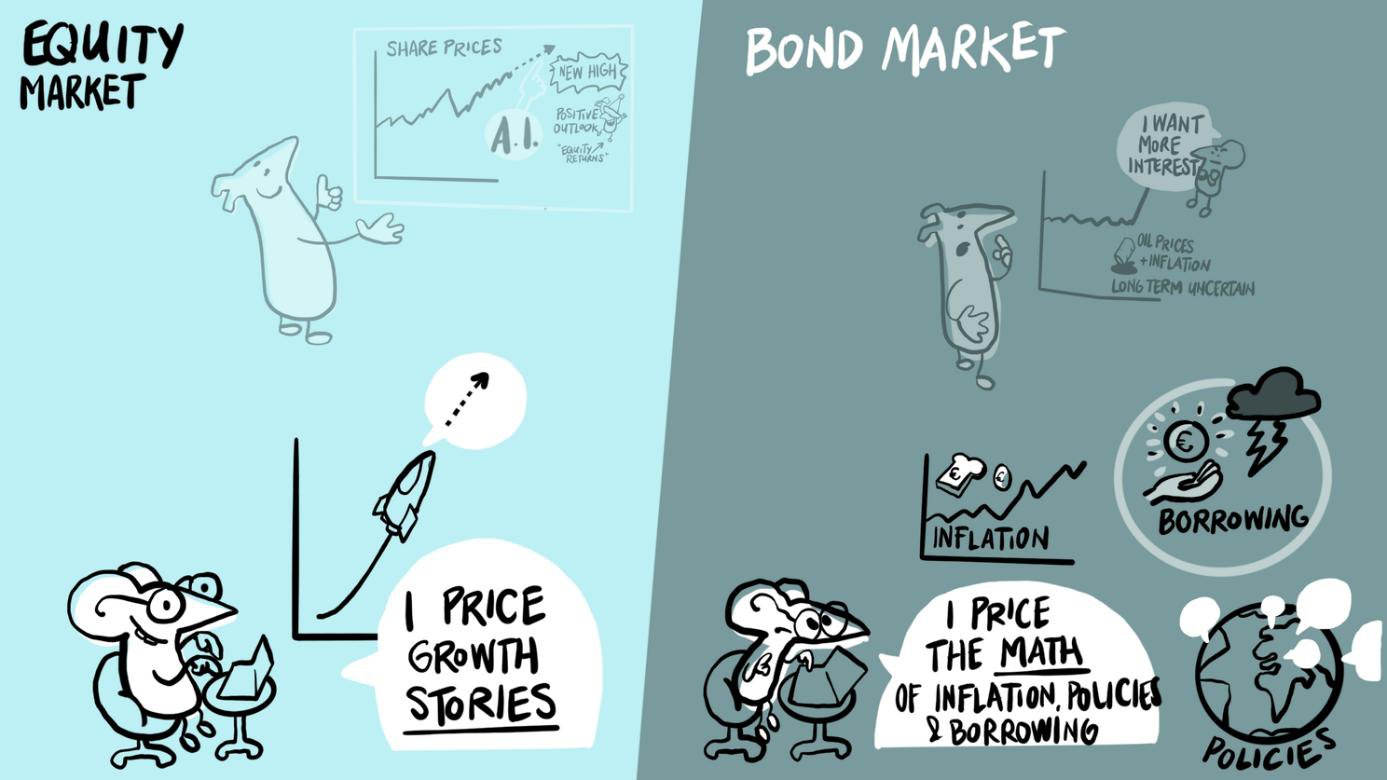
Image above zooms in on how these markets actually price assets.
Equity investors mainly look at companies. They focus on growth narratives:
revenue growth,
margins,
innovation,
market dominance,
strategic positioning.
In short: stories about future growth.
Bond investors look elsewhere. They focus on the system around companies and governments:
inflation,
borrowing needs,
fiscal discipline,
policy credibility.
Less story. More math.
Neither lens is “better”. They are simply different.
Putting the pieces together
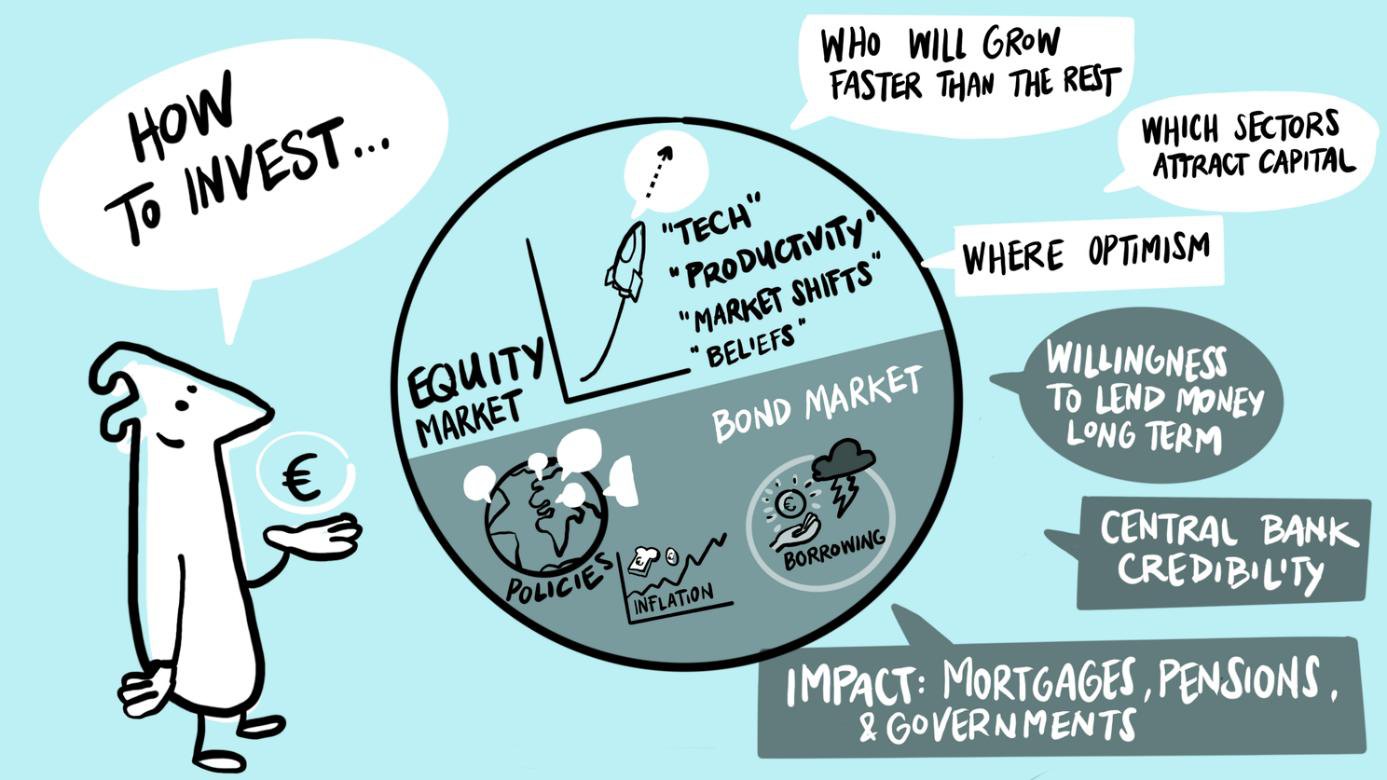
When you combine both views, something interesting happens.
Equity markets help us understand:
who is expected to grow faster than the rest,
which sectors attract capital,
where optimism — perhaps even excess optimism — lives.
Bond markets help us understand:
how willing people are to lend money long‑term,
how credible central banks and policies are perceived to be,
how financial conditions affect mortgages, pensions and government finances.
What looks like contradiction is often depth.
Markets aren’t confused. They are having an internal conversation.
A useful mental model
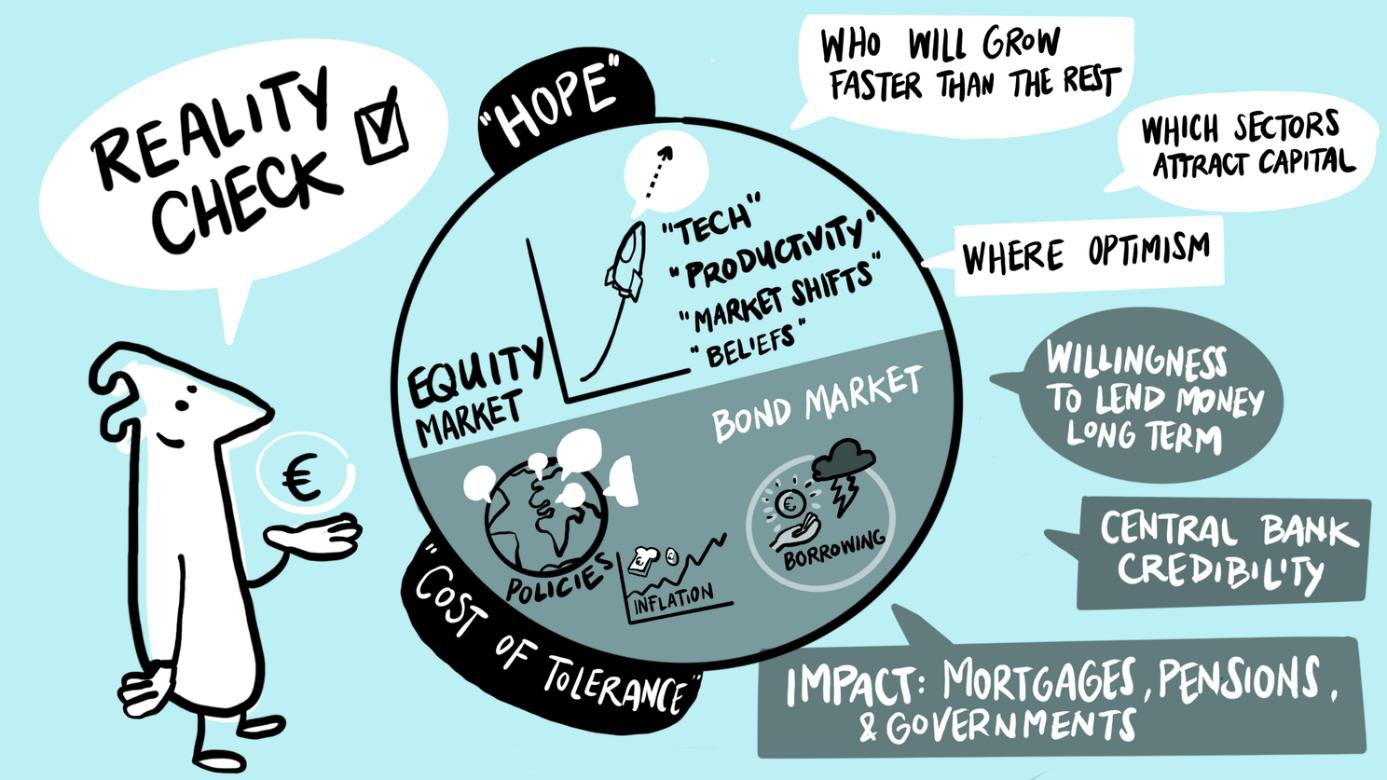
This leads to the takeaway in Image above.
It’s absolutely useful — even necessary — to follow the hopeful beliefs reflected in equity markets. They drive innovation and growth.
But using the bond market as a counterweight provides something invaluable: a sanity check on optimism.
You could think of it this way:
Equities show us hope, belief and ambition.
Bonds show us the cost of tolerance of those providing the money.
Stocks price dreams. Bonds price the conditions under which those dreams remain affordable.
Listening to both doesn’t make markets less exciting — it makes them more understandable.
Cartoons in Finance is my attempt to make financial markets less mysterious by drawing what usually stays implicit.
Thanks for reading — and for looking beyond the surface.
Originally published on LinkedIn. View original article.